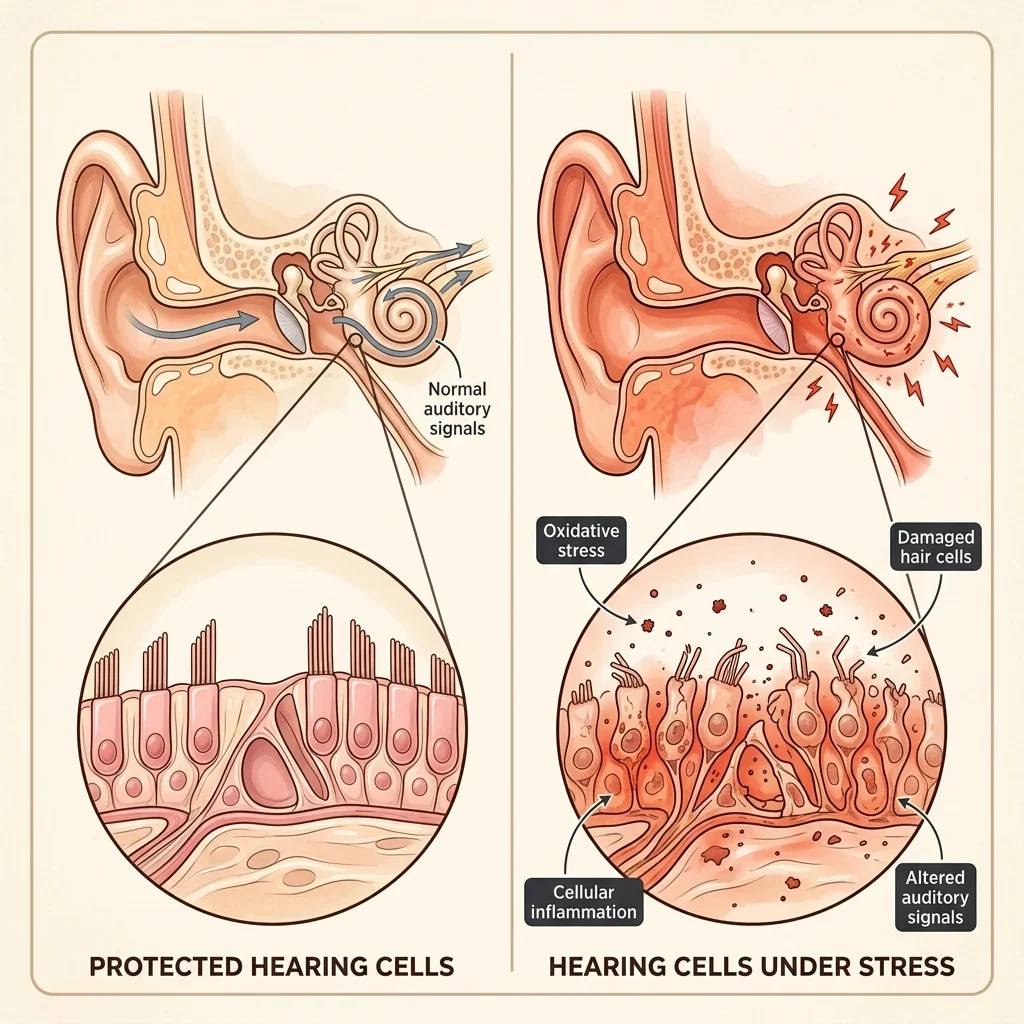
Your inner ear relies on a sophisticated network of natural
antioxidant defenses to protect delicate cochlear hair cells
from oxidative damage.
But years of excessive noise exposure, certain medications,
and natural aging can place increasing pressure on these
protective mechanisms. When oxidative stress exceeds the
body's ability to control it, sensitive auditory structures
can become damaged, potentially disrupting normal hearing
signals.
❌ White noise machines cannot reverse cellular
damage:
They help mask the perception of ringing by introducing
external sound, often providing temporary relief and
improving sleep. But sound masking does not repair damaged
cochlear hair cells or reverse underlying auditory injury.
The ringing may return as soon as the masking sound stops.
The symptom becomes more manageable, but the underlying
condition may remain unchanged.
❌ Ginkgo biloba has not demonstrated consistent benefits
for tinnitus:
Although ginkgo contains compounds associated with
antioxidant activity and vascular effects, clinical studies
have not established reliable benefits for tinnitus. There
is insufficient evidence that it protects damaged cochlear
hair cells or restores normal auditory signaling. Improving
general circulation does not necessarily translate into
repairing the delicate structures responsible for hearing.
❌ Zinc, B12, and generic tinnitus blends have important
limitations:
Zinc and vitamin B12 contribute to normal cellular and
neurological function, particularly when deficiencies are
present. However, supplementing these nutrients without a
deficiency has not been consistently shown to improve
tinnitus. Multi-ingredient tinnitus formulas also lack
convincing evidence that they can regenerate damaged hair
cells or reverse established auditory injury.
The critical distinction: Managing the
perception of ringing is not the same as repairing the
biological structures involved in hearing. Oxidative stress
is one potential contributor to cochlear injury, but
tinnitus can involve multiple mechanisms throughout the
auditory system.








 Verified Customer